Showing posts with label Circle Time. Show all posts

Sunday, March 29, 2020

Continent Studies - Africa Part 1

AFRICA ACTIVITIES 1ST INSTALLMENT

It has been all hands on deck these past two weeks since we have had our school suspended for COVID-19.  Since that time I have been working with many other Montessorians across the globe to get things into the hands of educators and parents.  I have been wanting to get back to blogging with regularity for some time now but have had other very pressing and difficult circumstances in my family's life to take care of first.  I am so glad things had gotten to a good place before all this happened.  I am also so grateful I have this platform already in place to make an impact for my own students as well as for so many others.  I wish to thank my readers for the outpouring of love and kindness at this time and in the past.  I want to be one of the helpers.  Thank you also for being one of the helpers.

We are gearing up for our Africa studies in Sequoias Class and I've been knee deep in creating new materials that are friendly to not only the classroom but for home as well.  In this post I will endeavor to share what I have made and a few other things I absolutely love.

Continent Globe
Continent Puzzle Map

Setting the Stage

Whenever we are introducing a new continent for study I will always take the Continent Globe and Continent Puzzle Map together during a Line Time.  We will sing the Continent Song together while pointing to the continents on the Continent Globe first and then again using the Continent Puzzle Map.  The WHY behind doing this is simply - the younger the child the more often they need to see that these things mean the same thing.  With the continued one-to-one correspondence practice more children will pick it up.

Every time we begin a new continent of study the children in our class renew their interest in coloring, cutting and pasting, and painting the continents.  

More advanced Early Childhood students will appreciate making their own Continent Globe.  This is also very beneficial for adults to create when a Continent Globe is not available.  If the child is really interested you can have them do the coloring with a little support.  The cuts make it difficult for Early Childhood students to know what color belongs where but it is such fun work.  I take whatever color they should be using and make a small mark in the spot to color.  This way they can be as independent as possible with the least amount of interference from adults.  Once colored they will need plenty of support in taping it together so it forms a globe.  

Continent Flat Map Work
The Colored Globe Cut Out
The assembled Globe
This following Coloring sheet is so helpful for this.  Whenever there is work that has a specific way to be done you should create a Control of Error.  That is one which is colored in the correct colors as an EXAMPLE. I always write EXAMPLE on the paper or else it may grow legs and go home with some little one.  Even then it may happen, but much less often. 

Continents of the World Coloring Sheet
This can also be used when a Continent Puzzle is not available.  You can print off two sets, color one set in the continent colors and the other with the blue ocean.  Then you can cut out the 
continent set and use them in place of the Continent Puzzle Map.

Assembling the Continent World Coloring Sheet to be used in place of a Puzzle Map
Continents Coloring Sheet Assembled as replacement for Puzzle Map

Introduction to Africa

Once we sing the Continent Song I will point to Africa and ask which continent this is.  Once that has been answered I will tell the children we will now begin our study of Africa.  There are two very good ways to introduce a continent.  The first is with ARTIFACTS and the second is through PICTURES.

ARTIFACTS
In Montessori Classrooms we sequence our work from most concrete to most abstract.  Artifacts are the most concrete representation of a continent.  I find artifacts from friends who have visited and brought things back for me, by visiting my local second hand shops, and sometimes online.  I try to get as many things second hand as possible.  Carvings, textiles, jewelry, money, art etc. all make great artifacts for students to explore.

Add in photo of artifacts

PHOTOS
Line Time Photos of a continent are large enough for everyone at the circle to see.  We want to give an overview of the continent in a short enough time to keep the interest of the entire group while whetting their interest for more.  That is easy to do with all the continents, but Africa is fabulous!


Introduction to Africa Line Time Cards

Once I have introduced our Continent it is time to give small group lessons for these very cool works.

AFRICA PLAY DOUGH MAP
This work is so lovely for the youngest students to use and they love it.  All works on a Montessori shelf should have an indirect purpose.  This work with play dough and the fitting into the small spaces of the map develop both the gross and fine motor control of the child.

Africa Play Dough Map
AFRICA TEAR MAP
This work helps the child with the fine motor control as they tear green paper strips into pieces small enough to be glued onto the paper.  The older the child the better they will be with the fineness of their tears.  It is a great thing to challenge your older and more advanced students to stay as much in the lines as possible.  This also develops hand-eye coordination.  I have included a page of green in case there is not access to a green sheet of paper.  It works best to cut the papers the child will use into a 1/4th of a sheet or even into strips 2 inches wide.

Africa Tear Map
AFRICAN MASKS ART
When presenting this work I will show a small group of children the African Mask cards and then invite them to color, watercolor, paint, or use oil pastels to create a beautiful mask with the African Masks Coloring/Painting Pages. They are meant to be cut in half.  We keep a smattering of the masks on a tray for the children to choose from.

African Masks

African Masks Coloring/Art Pages

AFRICAN TEXTILES CARDS
Something the children seem to enjoy a lot is the bold patterns of many African textiles.  These cards could to be printed twice to make a matching set.

African Textile Cards
  They could also be traced to make clothing like you see here using the Clothing Cut Out Patterns
Clothing Cut Out Patterns


ANIMALS OF THE SAVANNAH DIORAMA
This new work has been fun to create.  It is best suited for more advanced students to do independently.  Younger students will love doing this with a little support.  Follow their needs and help only as much as they need.

African Savannah Diorama Animals

African Savannah Animals Diorama Completed

Keep a look out for Installment 2 of Africa Activities!
Stay Safe!  Stay Healthy!

Loves,
Cath

Monday, November 3, 2014

Parts of the Eye Nomenclature Cards and Blackline Master Free Downloads - Plus a Musings About the Sense of Sight

I created this set over the summer for our class to use while we learned about the sense of sight.  This year I have changed from doing all the senses at once to focusing on on sense in a month.  All of the senses were introduced during the 3rd week of school, but taking each sense and focusing more in depth has been rather enjoyable for the children this year.  The sense of sight was the first sense of focus.

To begin the sense of sight we took a little walk out to our community garden with a bit of prompting to pay close attention to interesting things that we could see there.  Once back inside we had a discussion about all the things they could see.  This took some time since all the children wanted to talk about more than one thing that was interesting to them that they could see.  The next question was, of course, "What part of our body do we use to see?".  At a later circle I introduced the Model of the Eye.  I have long been of the opinion that the Early Childhood through the Upper Elementary Child can benefit greatly from good quality medical models just as much as the college student.  While I would love to have inexhaustible pockets, I do not, so I purchase the best quality I can for my budget.

This model is from EISCO and was purchased from Amazon using our Prime Membership.  It ran just about $25.00.

After the children were introduced to and had some experience with the model, I introduced them to some sheep eyes and did a dissection.  Now-- I must say that there was NOT one child who was grossed out by this science work.  Quite the contrary.  Utter fascination and riveted attention is more like it.  I used these Large Line Time Cards to point out different the same parts we were seeing in the sheep's eyes.

Parts of the Eye Large Line Time Cards
click on picture to link to file


On a different day I introduced the Parts of the Eye Nomenclature Cards and the accompanying booklets.  Especially the 4's & 5's loved this work.  There were some children who loved them so well, they took them off the shelf EVERY day for two weeks.
Parts of the Eye Nomenclature Cards
click on image to link to file

Parts of the Eye Blackline Master
click on image to link to file
  

Monday, January 7, 2013

Math Sentences for Beginners

During the break I wanted to put together some easy oral math sentences that I could read during circle times.  I will be pulling out counters, the colored bead stairs, objects etc. to do these, and getting help from time to time.

I have made sentences that will be applicable to the following:

  • The African Savannah
  • The Pond
  • The Garden
  • The Woods
  • The Arctic
  • The Antarctic
  • The Rainforest
I am going to try these out and give you feedback.  I think the children will love them.  I would LOVE to hear your feedback on these.  If they are a hit I will make more.  You can download a set of these math sentences by clicking on the picture.

Beginning Math Sentences
click on picture to link to file


Friday, September 28, 2012

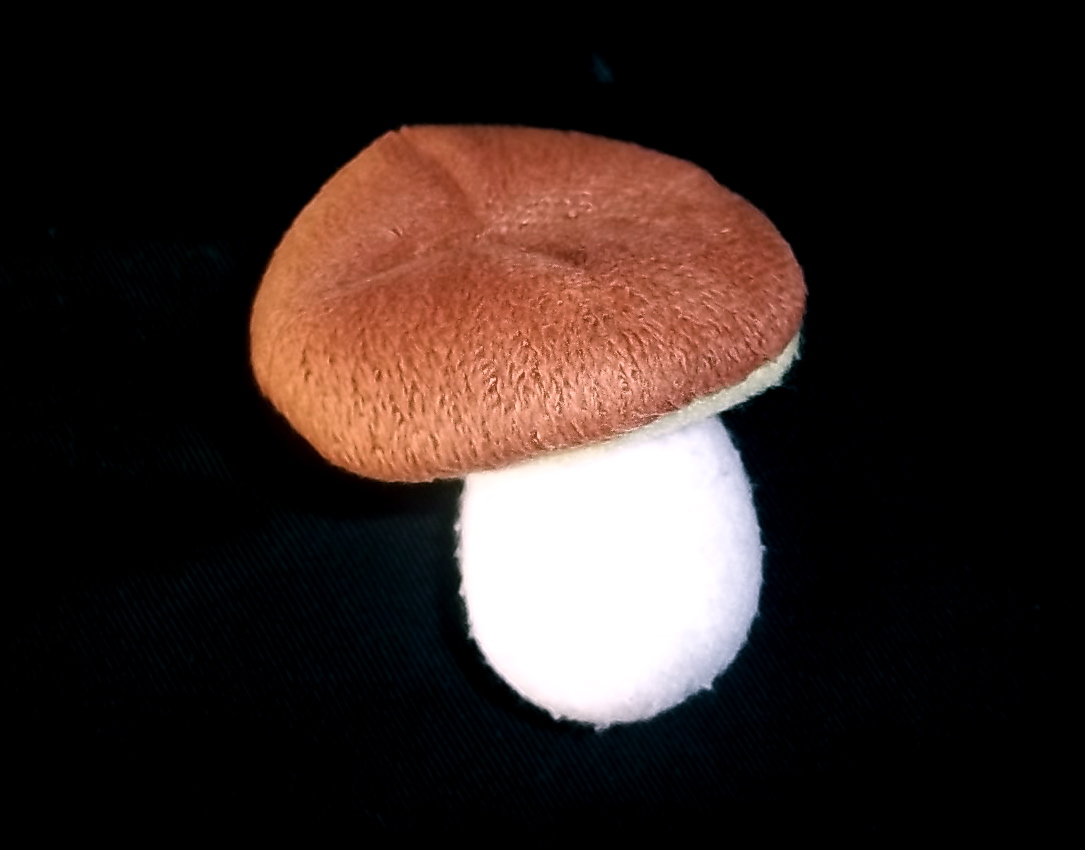
Circle Time & The Talking Mushroom

A couple of years ago I had another teacher observe my class and give me feedback.  I highly respect this woman and have made many of her methods part of my approach.  One bit of feedback to me was that during circle time, and during the reading of a book, I needed a better way to help the children in the class to learn respect for the person talking or reading, and a pleasant way to inspire the children in waiting a turn to speak.  In short... To practice grace and courtesy when we have something that is burning inside ourselves and we want so badly to share it.  She then left me with these thoughts to come up with a solution of my own.

I knew whatever I used it had to be special.  I wanted something they could hold that was small and preferably soft.  I rummaged around in a couple of drawers and found this little mushroom from IKEA.  When I held it in my hand it felt so pleasing that I was sure the children would love it.
  

I presented this as our TALKING MUSHROOM and explained that whoever is holding the talking mushroom will have a turn to speak.  We all get the chance to listen to the person who is holding the talking mushroom and take our own turn if we feel that we have something important to contribute.  Part of this discussion, that we do at the very beginning of every year, is to explore how we feel inside if someone talks over us.  No one likes the way it feels.  Everyone understands the desire to be listened to and to speak uninterrupted.  

Our Talking Mushroom has been a sensation ever since.  We make it a part of Circle Time and other group discussions.

Sometimes a discussion about a subject, book, project, or presentation will be so exciting, or bring up so many memories, that children will start talking over each other (much more at the beginning of the year).  When this happens I will take the mushroom out of the little basket that is it's home.  I will hold it in my hand and frequently that is enough to remind the children that we make it a point in our classroom to take turns respecting each other when we have something important to share.  I do a presentation early, early in the year about quietly raising our hand as a way to show courtesy when someone else is talking.

Thursday, August 16, 2012

Weather Chart with Cards

When it comes to the weather, I like to give children a way of becoming more aware that there is usually multiple kinds of weather happening outside at any given time.

Usually it is not just sunny outside.  It might be sunny - and cold - and windy all at the same time.  

In the last few years I was bothered that they did not have a way to show this in the classroom as well as I would have liked, and there was no way for them to show that the weather could change during the day.  Not only that, but so much of what is out there has all kinds of busyness around it or on it and I find it, frankly, annoying.  This set is ISOLATED and clean.

We used this set throughout our last school year with GREAT success.
Weather Cards
click on picture to link to file

During Circle Time we will discuss what is the weather outside like this:
  • A child is chosen (from our Helpful Hands) to come up with me to the Weather Board
  • The child will hold up each card and say to the group "Is it (sunny)?"
  • If the class agrees that it is (sunny) the helper will invite a different child to slide it into a pocket on the board
  • We go on like that until we have chosen all the different kinds of weather for the day
  • If during the day the weather changes, a child can add a card or change out a card if if they want
I do have to say that Rainbow comes around so infrequently that it is really special to be find a rainbow in the sky.  There is a bit of excitement when someone mentions that they have found a rainbow and are putting that card in.  Sometimes they will lament during circle time that it has been SUCH a long time since they saw a rainbow.

This is what our classroom Weather Chart looks like
Not a great photo - sorry

This is how I made it:
  • 1 12X18 sheet of thick light blue felt
  • 1 package of vinyl badge holders - vertical (you will need 4)
  • 1 package of adhesive sheets - extra strength
  • 1 cloth badge holder in black - horizontal - cut off string
  • weather cards printed on cardstock, cut out and laminated (you have to cut the lamination close to the edge for the cards to fit in the badge holders)
  • felt adhesive letters to make the words - what is the weather ?
  1. cut out the adhesive sheets to just inside the border of all the badge holders - both vinyl and cloth
  2. attach the adhesive sheets to the back of the vinyl badge holders
  3. attach the adhesive sheet to the back of the cloth badge holder so that the clear front pocket can hold all the cards not in use
  4. attach all four of the vinyl badge holders along the bottom edge of the blue felt - starting from the left, leaving room for the black holder
  5. attach the cloth badge holder on the right hand side 
  6. add the letters
  7. Put all the cards in the black 'reserve' pocket
Last note - One day this year we actually had 5 kinds of weather all together.  For that day we put that last kind of weather as the front card in the reserve pocket.